
The Dreamdata 2026 Report Says LinkedIn Wins on ROAS. Here’s the Nuance Nobody’s Talking About
By Valeria Sillani, Global Social Media & Paid Media Manager, EasyVista
Dreamdata just published its 2026 LinkedIn Ads B2B Benchmarks Report, and it’s the kind of dataset that makes paid media people either nod along or get defensive, depending on which platform they’ve bet their budget on. I’ve spent the last few weeks making the case for Meta in the B2B mix. So it’s only fair I sit with a report that, on its headline number, argues the opposite.
Here’s what the data actually says, and why I don’t think it changes my position as much as the headline suggests.
The Headline Number
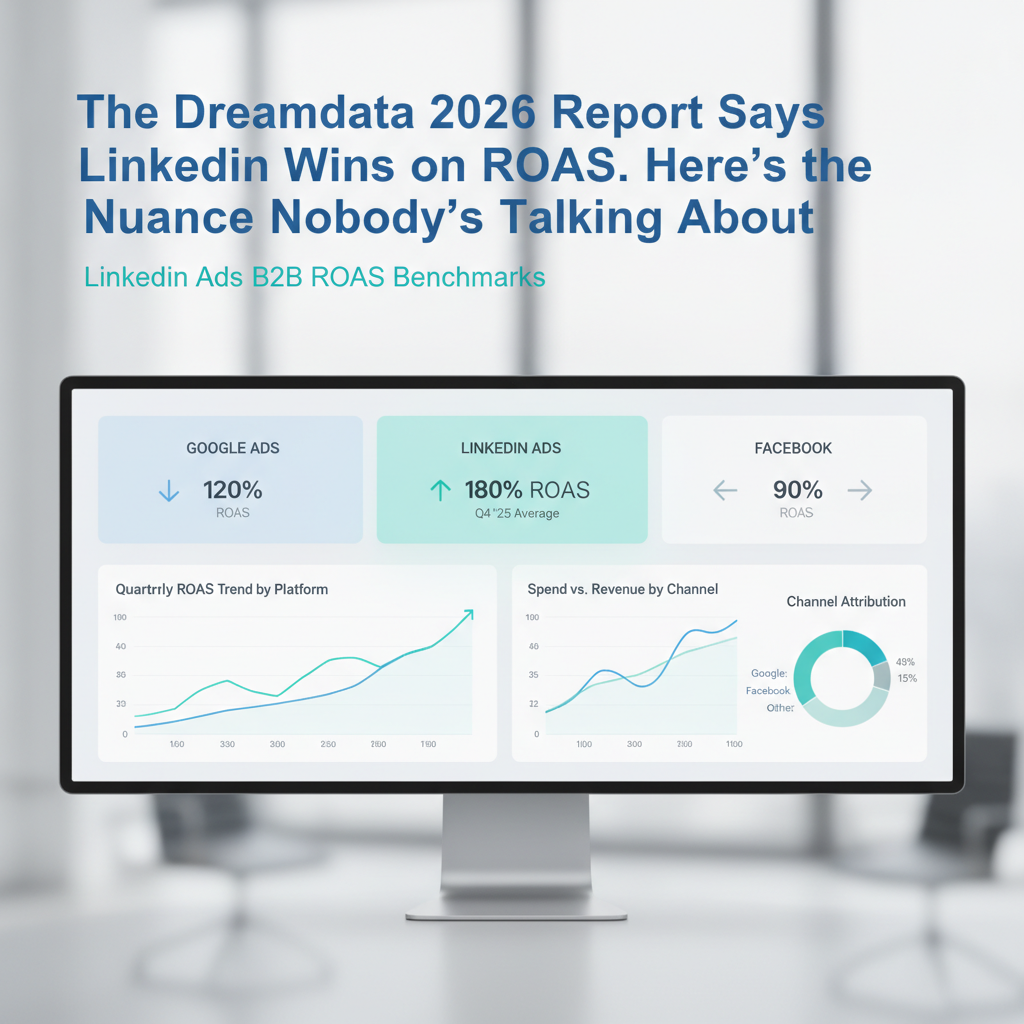
Dreamdata’s report, built on aggregated data covering more than 66 million sessions and 3.5 million customer journeys from its own B2B customer base, found that LinkedIn is the only major paid channel delivering a positive return on ad spend in 2025: 121%, up from 113% the year before. Google Search came in at 67% and Meta at 51%, both below breakeven by this measurement.
That’s a genuinely striking gap, and LinkedIn’s response has been to grab more of the budget pie. The report shows LinkedIn now capturing 41% of total B2B paid media spend among Dreamdata’s customer base, up from 39% the prior year. Cost per company influenced also improved sharply, dropping from roughly 154 EUR to 70.11 EUR.
If you stop reading there, the conclusion writes itself: shift more budget to LinkedIn, pull back from Meta. I don’t think that’s the right read, and the report’s own data on the buyer journey explains why.
The Buyer Journey Data Complicates the Story
The same report found that the average B2B customer journey has stretched to 272 days, up from 211 the year before, and that buyers now spend roughly the first 220 days, about seven months, self-educating before ever entering a measurable sales pipeline. The journey itself has gotten more complex too: 88 touchpoints on average, spanning four channels, involving ten stakeholders, all up year over year.
Here’s my issue with reading the ROAS numbers at face value. If 81% of the buyer journey happens before a deal enters the pipeline, and most attribution models weight credit toward the touchpoints closest to conversion, then a channel that operates almost entirely in that early, unmeasured 220-day window is structurally going to look worse on ROAS than a channel that shows up right before close. That’s not a flaw in Dreamdata’s methodology, which is genuinely more sophisticated than most attribution vendors. It’s a structural feature of how ROAS gets measured at all in long B2B cycles. Late-funnel channels get credited for demand that earlier channels built.
Meta’s role in most of the B2B programs I’ve run sits almost entirely in that early window: awareness, retargeting, nurture. LinkedIn, by the report’s own admission, is increasingly influential at every stage but especially strong as deals approach close, with the report noting LinkedIn’s influence on new business deals climbing to 28.3%, up sharply from 15% the year before. Different jobs, different points in a 272-day journey, and a ROAS metric that will always favor whichever channel sits closer to the finish line.
Where the Report and My Position Actually Agree
To be fair to Dreamdata, the report isn’t arguing that other channels are worthless. It’s framing LinkedIn as increasingly a full-funnel platform rather than only a brand play, and it’s making a real case that marketers systematically undervalue the channels operating earlier in a long, multi-stakeholder buying process because those channels are harder to credit with revenue.
That argument actually supports the case for Meta more than it undermines it. If the industry-wide problem is that early-funnel activity gets structurally undervalued by last-touch and even multi-touch attribution, that same undervaluation applies to Meta at least as much as it applies to LinkedIn’s own early-stage impressions. The report is essentially telling LinkedIn advertisers: don’t judge your early awareness spend by the same ROAS yardstick you use for bottom-funnel retargeting. I’d extend that exact logic across the full paid social mix, not just within LinkedIn’s own funnel.
What I’d Actually Do With This Data
I’m not going to pretend a 121% ROAS versus 51% ROAS gap is nothing. It isn’t. If your program is heavily bottom-funnel, if you’re running LinkedIn Lead Gen Forms and Conversation Ads against high-intent segments, this report is a strong argument to protect and even grow that budget line. LinkedIn earned that 41% share.
But the CPC comparison in the same report is worth sitting with too: LinkedIn’s average CPC now sits around 5.98 EUR. That’s the premium you pay for showing up at the point of decision. Meta’s CPC advantage, several multiples lower in most benchmark sets, is exactly what makes it viable for the volume and frequency an early-funnel, 220-day nurture motion actually needs. You cannot run seven months of consistent brand exposure to a wide audience at LinkedIn’s CPCs without a budget most B2B marketing teams don’t have.
So here’s where I land after reading this: Dreamdata’s report doesn’t disprove the case for Meta in B2B. It sharpens exactly what LinkedIn is for, late-funnel, high-intent, account-based precision, which makes the case for pairing it with a channel built for the seven-month runway before that, at a cost structure that can sustain it. The mistake isn’t choosing LinkedIn over Meta or vice versa. It’s applying a bottom-funnel ROAS metric to a top-funnel job and concluding the top-funnel channel failed.
Source: Dreamdata, LinkedIn Ads B2B Benchmarks Report 2026.
[🤖 Co-created with the assistance of AI / Written in alignment with EU AI Act transparency guidelines]
