
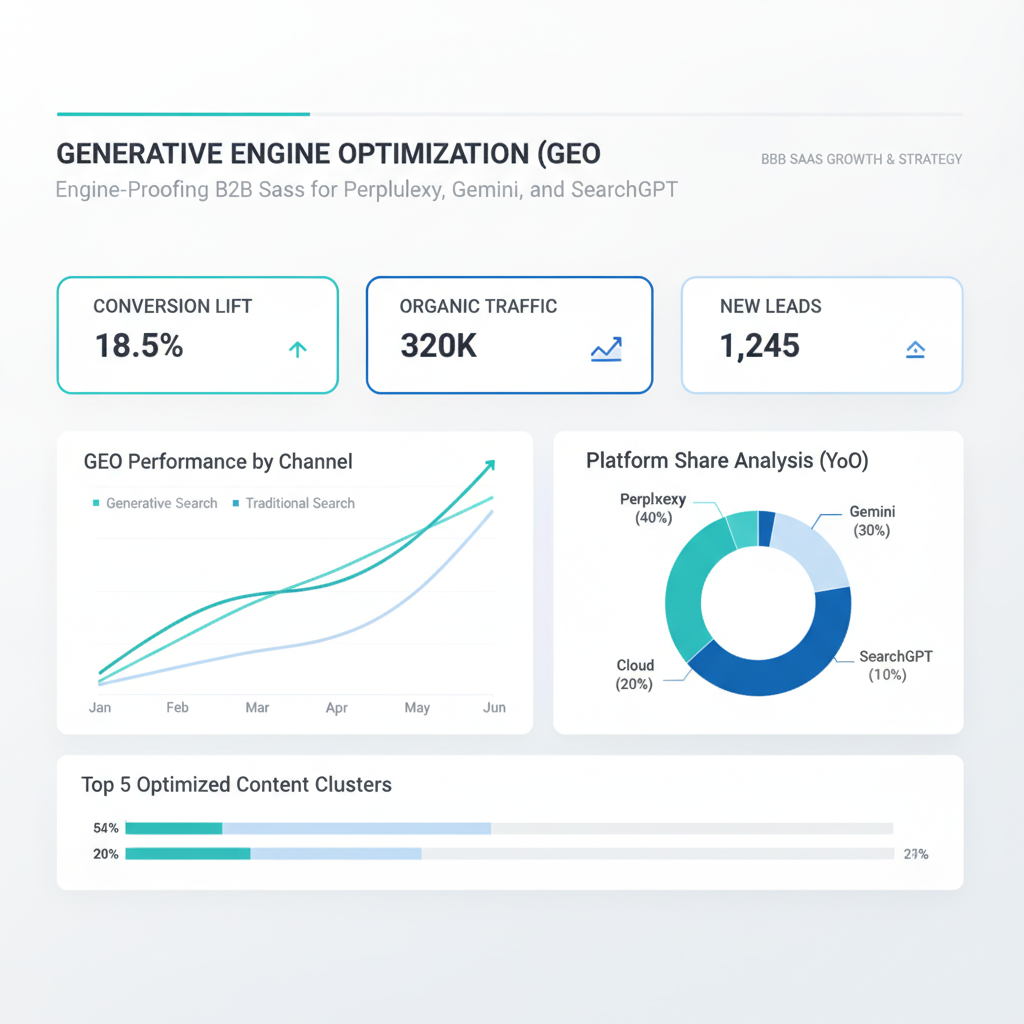
Traditional SEO Is Shifting
Traditional SEO was built for a web dominated by index crawlers and blue link listings. That architecture is disintegrating. Enterprise buyers are systematically abandoning traditional keyword searches in favor of conversational AI synthesis interfaces like Perplexity, ChatGPT, and Google Gemini.
When a VP of Infrastructure asks an LLM: What are the top enterprise observability platforms for multi-cloud Kubernetes environments, and how do their pricing structures compare?, your rank #1 organic blog post is functionally invisible unless it has been indexed, parsed, and cited directly inside the model’s real-time Retrieval-Augmented Generation (RAG) loop.
Winning top-of-funnel acquisition over the next decade requires moving beyond classic search mechanics. B2B SaaS growth teams must transition to Generative Engine Optimization (GEO): structuring brand authority, technical data, and platform messaging so LLMs cite your software as the definitive category solution.
Key idea: GEO shifts optimization from keyword rankings toward entity authority, retrieval visibility, and citation share of voice.
Diagram 1

From Keywords To Entities
Generative engines don’t evaluate pages based on exact-match keywords or simple backlink volume. They rely on vector embeddings, entity resolution, and probabilistic consensus across training sets and real-time retrieval networks.
To appear consistently in AI-generated vendor shortlists, your platform must exist as a clearly defined, verified entity inside the LLM’s knowledge graph. This requires establishing broad digital consensus across high-trust external sources:
- Developer and engineering communities: active discussions on Reddit, Hacker News, and technical Stack Overflow threads parsed during RAG crawls.
- Verified peer review hubs: structured rating data and direct feature comparisons on platforms like G2, Capterra, and TrustRadius.
- Technical code repositories: ungated documentation, open-source SDKs, and GitHub repositories.
- Industry executive transcripts: executive podcast transcripts, keynote presentations, and industry benchmark reports indexed by answer engines.
Content Architecture For RAG
RAG pipelines scan pages to extract contextually dense information blocks. If your product documentation or technical comparison guides are wrapped in fluff, the parser skips them entirely.
To maximize LLM extraction rates, structure your technical content using the Information-Dense Structured Format (IDSF):
Direct Answer Lead-Ins
Open every major technical section with a precise, definitive statement of roughly 15 to 25 words that directly resolves the primary query. LLMs extract these concise blocks as immediate summary answers.
Tabular Data Formatting
Generative crawlers process HTML tables efficiently. Present feature capabilities, API rate limits, compliance certifications such as SOC 2 or HIPAA, and pricing models in clean, unnested tables rather than bulleted narrative paragraphs.
Clear Technical Language
Drop generic marketing language. Replace phrases like our revolutionary data orchestration engine with precise technical claims such as distributed data processing framework handling 100,000 events per second via Apache Kafka integrations.
Diagram 2

Consensus Shapes Visibility
Generative models rely on consensus logic. If your corporate site claims your software deploys in under 10 minutes, but independent user reviews on Reddit or G2 highlight multi-week implementation delays, the AI engine will summarize the consensus view and reflect that friction to prospective buyers.
GEO therefore mandates active management of off-site brand sentiment. Growth and marketing operations must systematically monitor developer channels, technical review hubs, and third-party category comparisons.
Securing a consistent, positive, and technically accurate presence across these ungated spaces directly influences how generative engines present your product during buyer evaluation prompts.
Measuring Citation Share
Organic impressions and page sessions are no longer reliable primary KPIs for search performance. As answer engines resolve user intent directly inside the interface, tracking organic search clicks offers an incomplete picture of brand reach.
Modern SEO teams must measure Citation Share of Voice (CSOV):
CSOV % = (Number of prompts citing your brand / Total target category prompts tested) × 100
Audit your category’s primary buying prompts across Perplexity, ChatGPT, and Gemini on a bi-weekly basis. Track how often your product is included in recommended software lists, whether your core value proposition is captured accurately, and which external links the engines cite to justify their answers.
Optimizing for CSOV ensures your software remains visible, credible, and recommended as enterprise buying shifts to AI-driven discovery.
Disclaimer: Ai sensi dell’EU Act, this article was written with AI support.
