
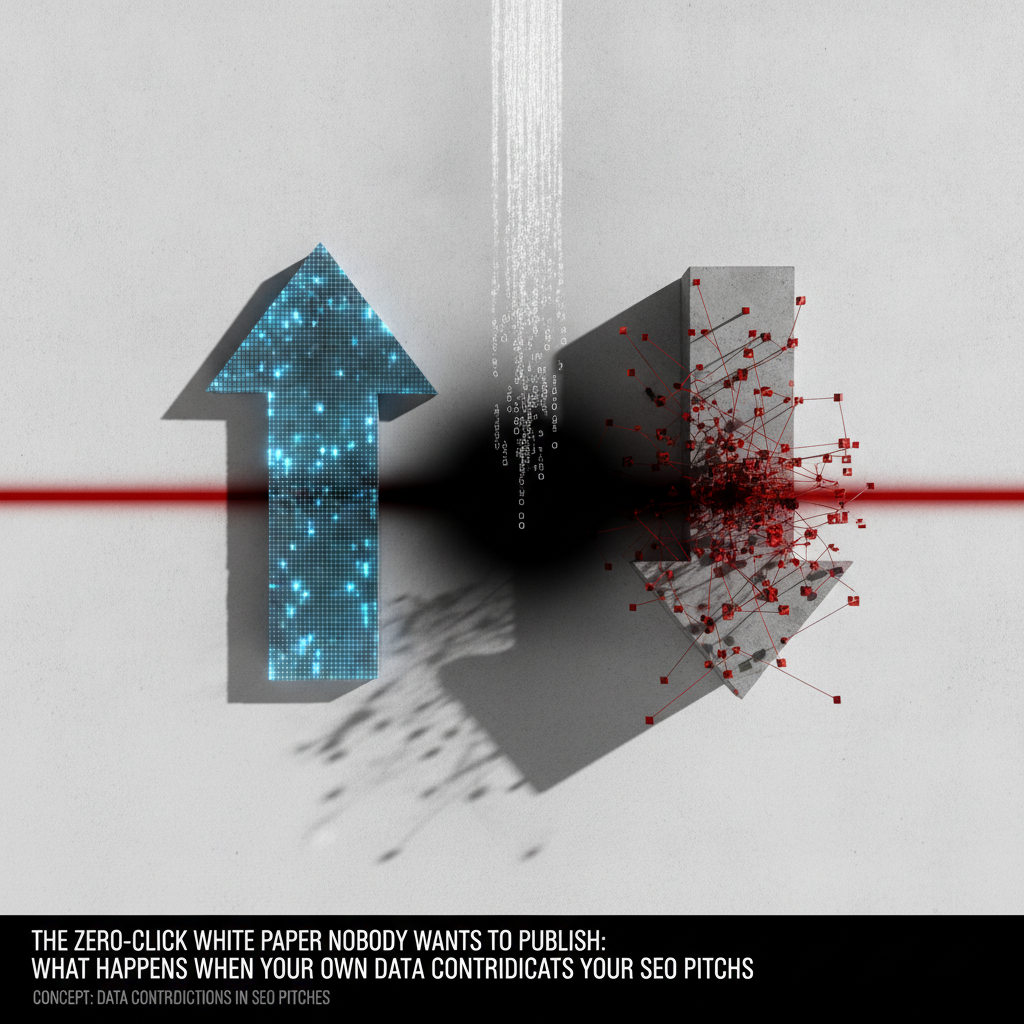
The Zero-Click White Paper Nobody Wants to Publish: What Happens When Your Own Data Contradicts Your SEO Pitch
By Gaetano Romeo, Head of Global Digital Marketing, EasyVista
Most SEO case studies get published because the numbers are flattering. Traffic up, leads up, ranking up, publish. What almost nobody publishes is the version where the same underlying data set tells a more complicated story, because admitting complexity feels like admitting the strategy didn’t fully work. I think that instinct is backwards, and our own zero-click research is a good example of why.
The Number Everyone Quotes, and the Number Nobody Sits With
Organic traffic has declined an estimated 15 to 25% industry-wide as AI-generated answers increasingly resolve queries before a click ever happens. Ninety four percent of B2B buyers now use large language models somewhere in their purchase journey. Ahrefs data shows AI Overviews cut click-through rates by 34.5% on the queries where they appear. Every one of those numbers is now a standard slide in any SEO conference deck, mine included.
What’s rarer is a paper that sits with what those numbers actually mean for a specific, real organic search program, including the parts that don’t fit neatly into “SEO still works, just differently.”
What Our Own Numbers Actually Show
At EasyVista, organic search grew 92% year over year, a genuinely strong number by any benchmark. Over the same period, paid search’s share of our channel mix fell from roughly 44% to somewhere between 13 and 15%, while paid social climbed from around 1% to roughly 24% of the mix. On the surface, that’s a clean, publishable story: organic scaled while paid search retreated, exactly the narrative every SEO team wants to tell right now.
Here’s the part that complicates it, and the part most white papers in this space would quietly leave out. A 92% organic traffic increase happening at the same time industry-wide organic traffic is declining 15 to 25% doesn’t mean zero-click search isn’t affecting us. It means our growth is happening against a headwind, not in the absence of one, and reporting the growth number alone without acknowledging the headwind overstates how much of that gain is attributable to strategy versus how much traffic we’re simultaneously losing to AI Overviews on the exact same query set. Both things are true simultaneously. Most papers pick one.
Why the Comfortable Version of This Data Is the Less Useful One
The comfortable white paper says: SEO still works, invest more. The uncomfortable, more accurate version says: SEO still works, and it’s also being structurally eroded on a subset of queries at the same time, and the net positive result you’re seeing is the difference between two forces moving in opposite directions, not the absence of the negative one.
That distinction matters enormously for how a marketing leader should actually plan. If you only see the 92% growth number, the natural conclusion is “double down on the exact same content strategy.” If you see the growth number alongside the 15 to 25% industry-wide decline and the 34.5% CTR reduction on AI Overview queries, the conclusion changes to something closer to: the queries still driving traditional clicks are narrowing, so growth increasingly has to come from claiming a larger share of a shrinking pool of clickable queries, not from assuming the whole pool is expanding the way it did five years ago.
The Case for Publishing the Contradiction, Not Resolving It
There’s a real temptation, and I’ve felt it, to smooth this into a single clean narrative before it goes out under a company name. I think that temptation is exactly what makes most SEO thought leadership less credible than it should be. A paper that shows 92% organic growth without ever mentioning zero-click headwinds reads, to anyone who already knows the industry data, as either naive or selective. A paper that shows both numbers side by side and explains the mechanism connecting them reads as something a practitioner can actually trust and use.
Research on AI citation patterns reinforces this same point structurally: 76% of AI citations still come from pages already ranking in the traditional top 10, meaning the fight for visibility hasn’t moved away from classic SEO fundamentals so much as it’s been layered with an additional, less forgiving filter on top of them. A paper that only celebrates the growth misses that the filter is real and getting stricter.
What I’d Actually Put in a Paper Like This
- Report headline growth numbers alongside the relevant industry-wide decline figures for the same period, so the net effect is visible rather than implied.
- Break out which specific query categories are still growing versus which are flattening or declining under AI Overview pressure, since an aggregate traffic number hides that split completely.
- Be explicit about what portion of channel mix shift, paid search down, paid social up in our case, is a deliberate reallocation decision versus a response to declining paid search efficiency, since conflating the two overstates how “strategic” the shift actually was.
- Treat a data set that partially contradicts the pitch as more credible evidence, not less, and say so directly in the paper rather than editing the contradiction out.
The Paper Worth Publishing
The version of this white paper that actually helps another marketing leader isn’t the one where every number points the same direction. It’s the one that shows real growth happening inside a genuinely more hostile search environment, and explains honestly what’s driving the net positive result. That paper is harder to write and slightly less satisfying to publish. It’s also the only version worth trusting.
Sources:
- Dark Social and AI Search: How B2B Buyers Are Finding SaaS Tools in 2025, GrackerAI
- AI Search, Zero-Click & the B2B SaaS Buyer Journey in 2026, Altair Media
- 38 B2B SEO Statistics and Organic Search Trends for 2026, GTM8020
[🤖 Co-created with the assistance of AI / Written in alignment with EU AI Act transparency guidelines]
